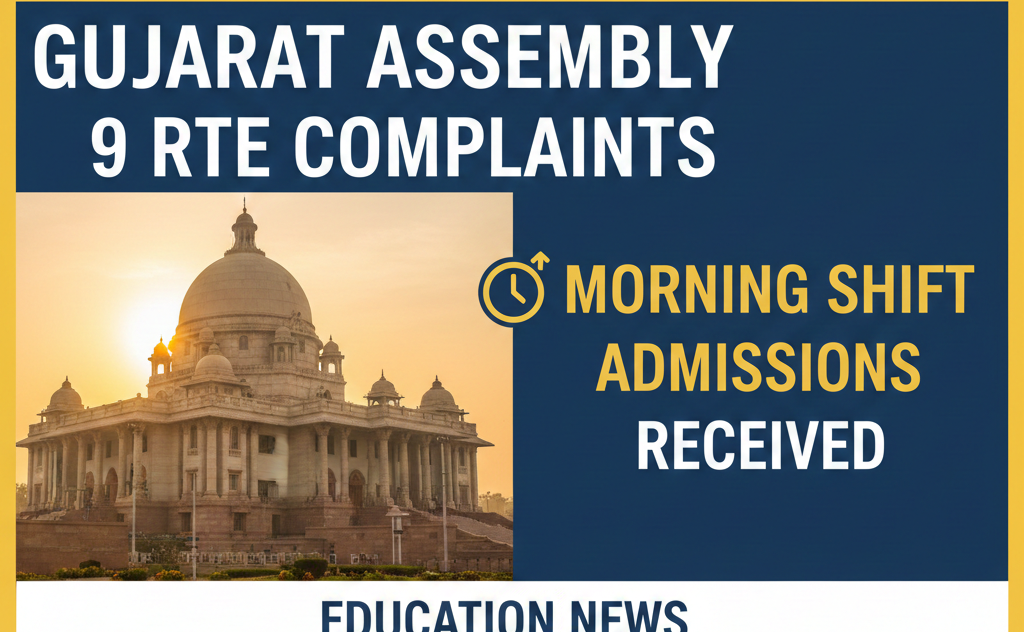
The Gujarat assembly recently received nine complaints concerning the Right to Education (RTE) Act and its implementation in morning shift admissions. These complaints have sparked discussions among parents, educators, and policymakers, highlighting the challenges and complexities of the RTE admission process in Gujarat. This article delves into the specifics of these complaints, the government’s response, and the potential impact on students and schools.
Seventh Day School: 8,000 RTE Admissions Denied Over 9 Years
UP RTE Admission: Record 2.61 Lakh Applications Received
Introduction to RTE and Current Complaints
Overview of the Right to Education Act
The Right to Education Act, enacted in 2009, mandates free and compulsory education for children aged 6 to 14 years in India. It aims to eliminate barriers to education and ensure equitable access for all children, regardless of their socio-economic background. In Gujarat, the implementation of this act has faced several challenges, particularly regarding the logistics of morning shift admissions.
Specifics of the Morning Shift Admission Complaints
The nine complaints received by the Gujarat assembly focus on the difficulties faced by parents and students due to morning shift admissions. Issues include inadequate transportation facilities, lack of proper infrastructure in morning shifts, and the impact on students’ health and academic performance. These complaints highlight a growing concern about the efficacy of RTE implementation in the state.
Government and Assembly Reactions
Official Statements and Plans
In response to the complaints, the Gujarat government has acknowledged the issues and promised to address them. The assembly has planned a series of discussions and consultations with educational experts and policymakers to develop viable solutions. Official statements emphasize the government’s commitment to improving the quality of education and ensuring that all RTE provisions are met.
Analysis of Assembly Discussions
The recent assembly sessions have focused on analyzing the root causes of these complaints. Discussions have highlighted the need for better coordination between schools and transportation services, as well as improvements in infrastructure and resources for morning shift schools. The assembly aims to draft a comprehensive action plan to tackle these issues effectively.
Impact on the Education Sector
Student and School Perspectives
Morning shift admissions have significant implications for both students and educational institutions. Students often face challenges such as early wake-up times, limited access to extracurricular activities, and increased fatigue, which can affect their academic performance. Schools, on the other hand, struggle with resource allocation and maintaining consistent educational standards across different shifts.
Long-term Educational Implications
The ongoing issues with RTE implementation in morning shifts could have long-term consequences for educational policy in Gujarat. If not addressed, these challenges could undermine the objectives of the RTE Act and hinder the state’s educational progress. It is crucial for the government and stakeholders to work collaboratively towards sustainable solutions.
Expert Opinions and Legal Context
Insights from Education Analysts
Educational experts suggest that addressing RTE complaints requires a multi-faceted approach. Recommendations include enhancing infrastructure, increasing funding for morning shift schools, and providing additional support for transportation and health services. Experts also emphasize the importance of community engagement and feedback in shaping effective educational policies.
Legal Ramifications and Historical Context
The complaints about morning shift admissions also raise questions about the legal obligations under the RTE Act. Historically, similar issues have prompted legal interventions to ensure compliance with educational standards. It is imperative for the Gujarat government to align its policies with national legal frameworks to avoid potential litigations and ensure equitable education for all.
Conclusion and Future Prospects
Potential Solutions and Recommendations
To resolve the complaints about morning shift admissions, the Gujarat government should consider implementing a comprehensive strategy that includes infrastructure upgrades, enhanced transportation services, and increased funding for morning shift schools. Additionally, fostering collaboration between government bodies, schools, and communities will be essential for successful RTE implementation.
Next Steps for Stakeholders
For parents, educators, and policymakers, the focus should be on advocating for transparent communication and accountability in the education system. Stakeholders should actively participate in discussions and provide feedback to ensure that proposed solutions address the real needs of students and schools. By working together, Gujarat can overcome these challenges and achieve the goals of the RTE Act.
Frequently Asked Questions (FAQ)
- What are the main complaints about RTE morning shift admissions in Gujarat?
- The primary complaints include inadequate transportation facilities, insufficient infrastructure, and negative impacts on students’ health and academic performance.
- How is the Gujarat assembly responding to RTE complaints?
- The assembly is conducting discussions with educational experts and policymakers to develop an action plan that addresses the root causes of these complaints.
- What impact do RTE complaints have on students?
- Students face challenges such as early wake-up times, limited access to extracurricular activities, and increased fatigue, which can affect their academic performance.
- What are the legal implications of RTE complaints in Gujarat?
- The complaints raise questions about compliance with the RTE Act and may lead to legal interventions to ensure that educational standards are met.
- What steps can the government take to resolve RTE complaints?
- The government can address these issues by improving infrastructure, enhancing transportation services, and increasing funding for morning shift schools.
In conclusion, the Gujarat assembly’s receipt of nine RTE complaints about morning shift admissions underscores the need for systemic improvements in the state’s educational policies. By addressing these challenges, Gujarat can ensure equitable and quality education for all its students, fulfilling the promise of the Right to Education Act.